What Does Takashi Murakami Use to Make His Art
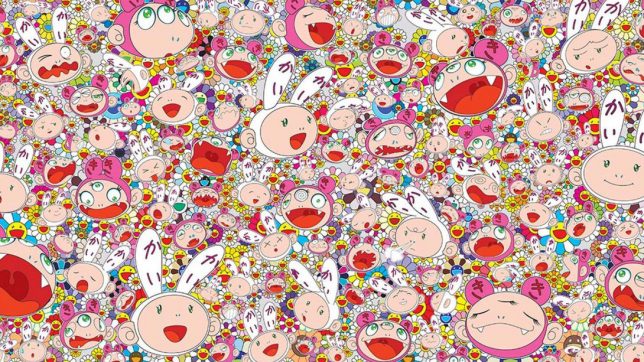
Who is Takashi Murakami ? Famous for his color saturated and sexually deranged anime artworks, the artist is often outshined past his psychedelic asphyxiating vision. Artsper shares 10 facts that will assist you empathise and read his fine art.
1. A combination of modernism and tradition
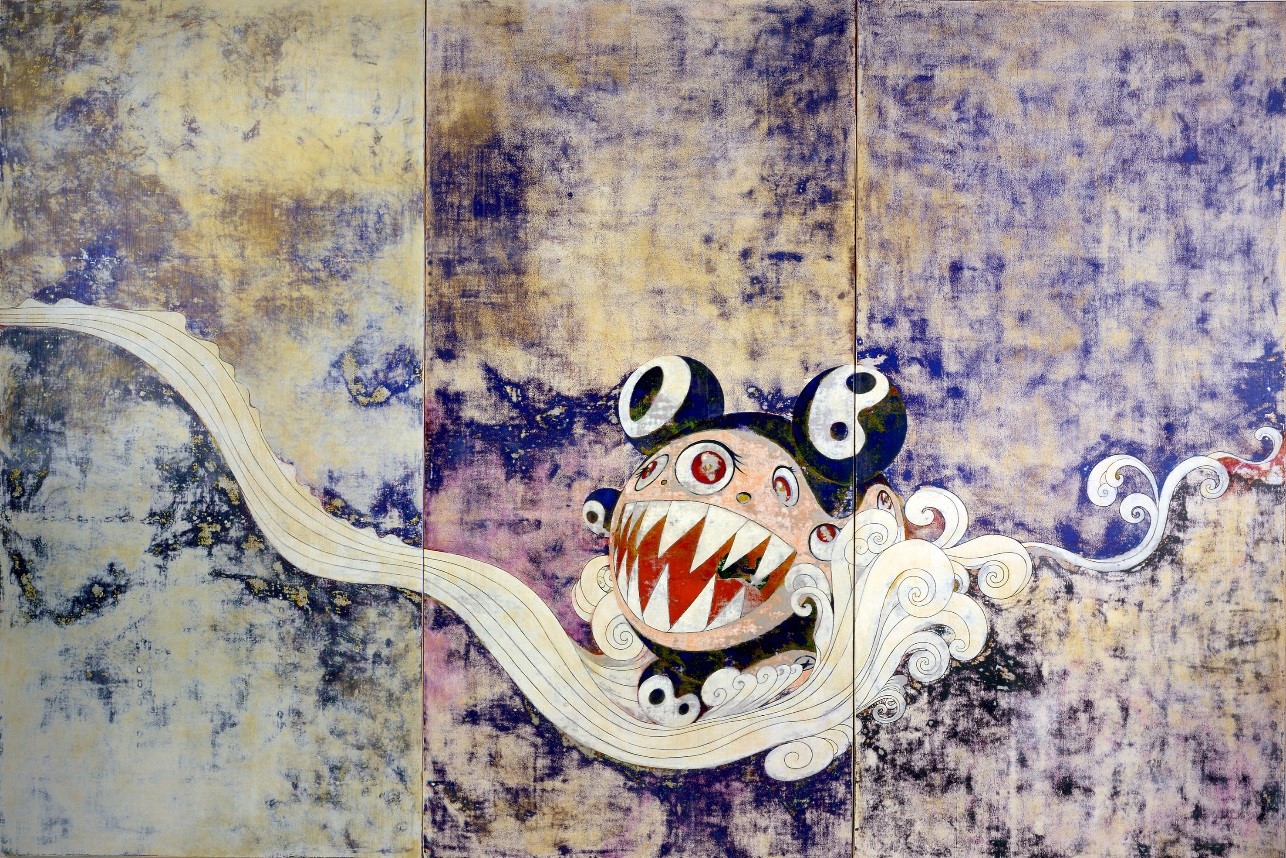
Fifty-fifty though Japanese artist Takashi Murakami is known for his visually contemporary and vibrant work, he offers us a more subtle reflection and a clever play of contrasts betwixt tradition and modernity. On a technical level, he uses artistic media and materials of cutting edge applied science and at the aforementioned time revives ancient Japanese creative techniques like gold foliage painting. Also, on a more than figurative level, he creates a colour saturated earth – almost hallucinogenic – where Buddhist iconography and anime heroes share the canvas together. There are also hints of traditional references like Ogata Korîn and mod ones like Stanley Kubrick.
2. Superflat

Takashi Murakami is the creator of artistic motion "Superflat". The term was used for the first time in 2001 during an exhibition he organized in Tokyo retracing the origins of Japanese gimmicky fine art through the history of Japanese traditional art. This artistic trend includes Japanese fine art inspired by manga and anime. In the word Superflat: there is the discussion "apartment" that refers to the flatness found in Japanese pictorial art. Indeed, for centuries, Japanese art does not know of perspective and is e'er very two dimensional. Superflat also criticizes the vacuity of consumerist Japanese post-war culture.
3. Near Andy Warhol

Murakami's fine art is strongly influenced by the work of Andy Warhol. Indeed, his 2 art pieces Warhol/Silver and Warhol/Gilded are a direct reference to Warhol's flower series. We find in Murakami a deep respect for Warhol's legacy but also a stunning and profound reflection for his master. In Sarah Thornton'due south book Seven days in the fine art world, when asked most Warhol, Takashi answers with a surprising frustration in his words:
"Warhol's genius was his discovery of easy painting," he explained. "I am jealous of Warhol. I'one thousand always asking my design team, 'Warhol was able to create such an easy painting life, why our piece of work so complicated?' But the history knows! My weak betoken is my oriental groundwork. Eastern season is too much presentation. I think information technology is unfair for me in the gimmicky fine art battlefield, but I take no option because I am Japanese."
4. Kaikai Kiki Co

Like Warhol, Murakami creates a sort of factory, an atelier developed into an empire, Kaikai Kiki Co. A lot like Jeff Koons' factory in New York, they are places of production where hundreds of workers execute different steps of artistic process to realize the artists' idea. However Murakami goes further in this approach and creates numerous merchandise like flower anime printed rugs referring to his signature motif.
five. Anime in Versailles

Versailles Château has had 2 exhibitions that created uproar the past years. Jeff Koons retrospective in 2008 and besides Murakami's exhibition in 2010. Takashi presented 22 sculptures and paintings, eleven of which were made specially for the outcome. This exhibition was condemned by certain activists like Versailles monday Amour and Non aux mangas. These purists all the same non over the Jeff Koons feel tried unsuccessfully to stop Murakami's exhibition.
six. Different levels of understanding
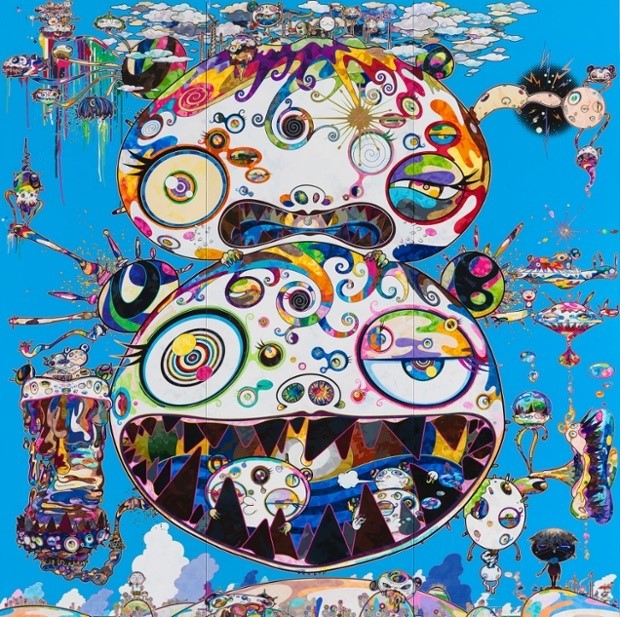
Although Murakami'south work expresses an apparent psychedelic candor, he invites united states to read betwixt lines and offers a solid pictorial reflection. 3 levels of understanding appear to us.
First level of understanding: the criticism of otaku, extremist anime fans who inspire Takashi just superficiality and emptiness. This fanatic insanity is exaggerated and mocked through a pictorial work of caricature and distortion.
Second level of understanding: the influence of order'southward consumerist culture and its products in our personality and beliefs.
Third level of agreement: the artist achieves an interesting union between "high culture" and the then called "popular" culture : a syncretism that raises the question of the legitimacy of this divergence, a subject debated in the globe of art today.
vii. Mr. DOB

Mr. Dob, Takashi Murakami's signature grapheme was revealed in 1992. Used as a sort of self-portrait, it appeared at a fourth dimension when artists like Barbara Kruger and Jenny Holzer were introduced to Nihon. The work of these artists is very focused on words. Their message delivering artworks will take an impact on Murakami. Mr. Dob has a round head with two ears, like Mickey Mouse, the letter of the alphabet D is inscribed on the left ear and the letter b is inscribed on the correct ear. Dob is a wrinkle of a Dada like phrase "dobojite, dobojite" which ways "why why ?". With this singular alter-ego, Murakami wanted to create an icon, which, while authentically Japanese, would have universal appeal.
8. Louis Vuitton

In 2003, the famous mode designer Marc Jacobs asked Murakami to join him on a collaboration where the artist will reinterpret Louis Vuitton'south archetype handbags. This particular collection was interesting for Murakami on a creative level. Indeed, the make accustomed that the logo be interpreted in dissimilar colors leaving him an artistic flexibility. Furthermore this spousal relationship born from this hybrid collaboration of a gimmicky artist and a luxury brand will be a revolution in the world of fine art and fashion.
9. Pop music
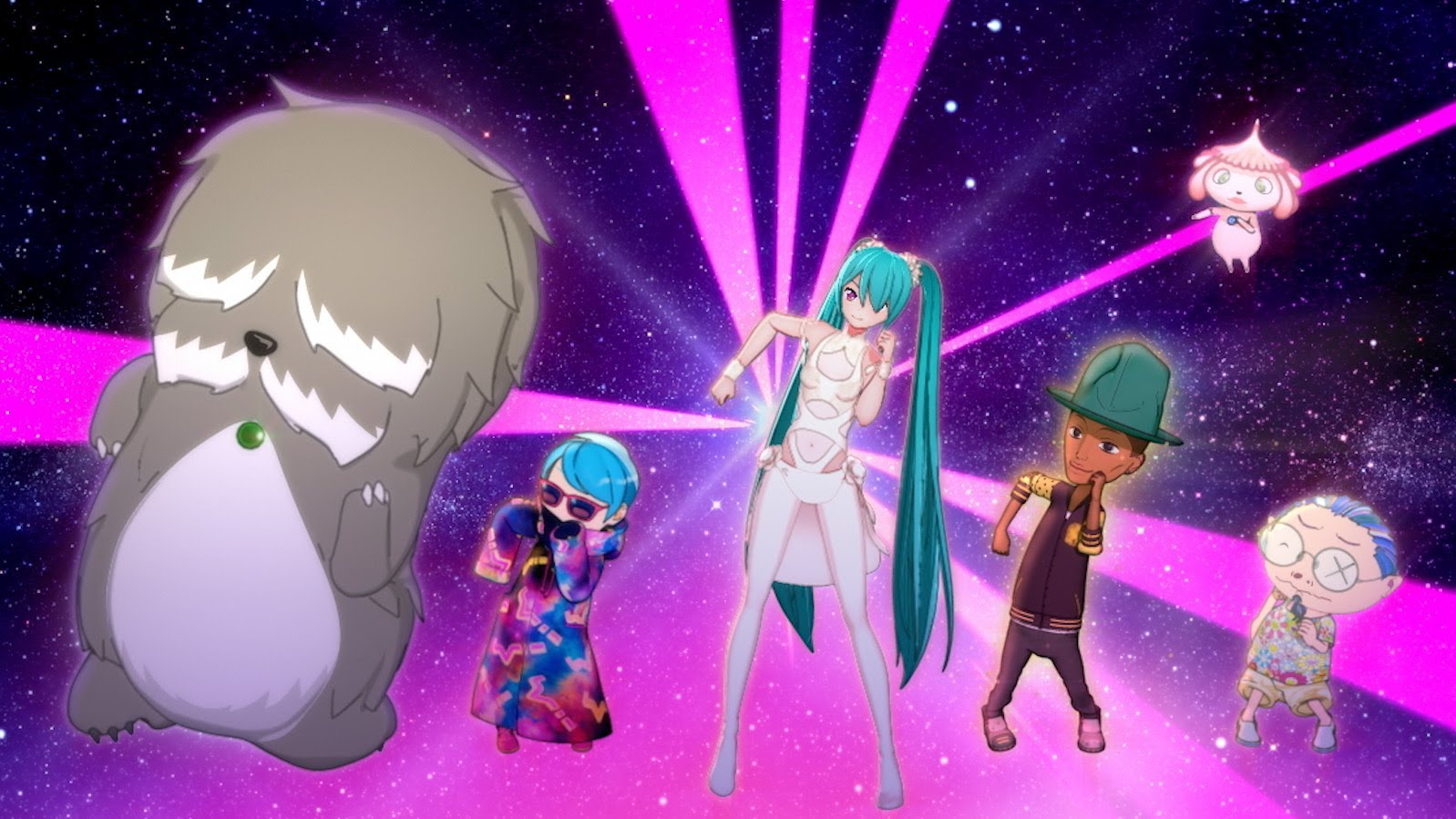
Afterward art and fashion, Murakami invests himself in music and audiovisual work. His first music video was for Kanye West in 2007 and recently Pharrell Williams. In September 2014, he directs the video for Pharrell'south song "It Girl", where the singer will accept his own anime character.
10. My Lonesome Cowboy
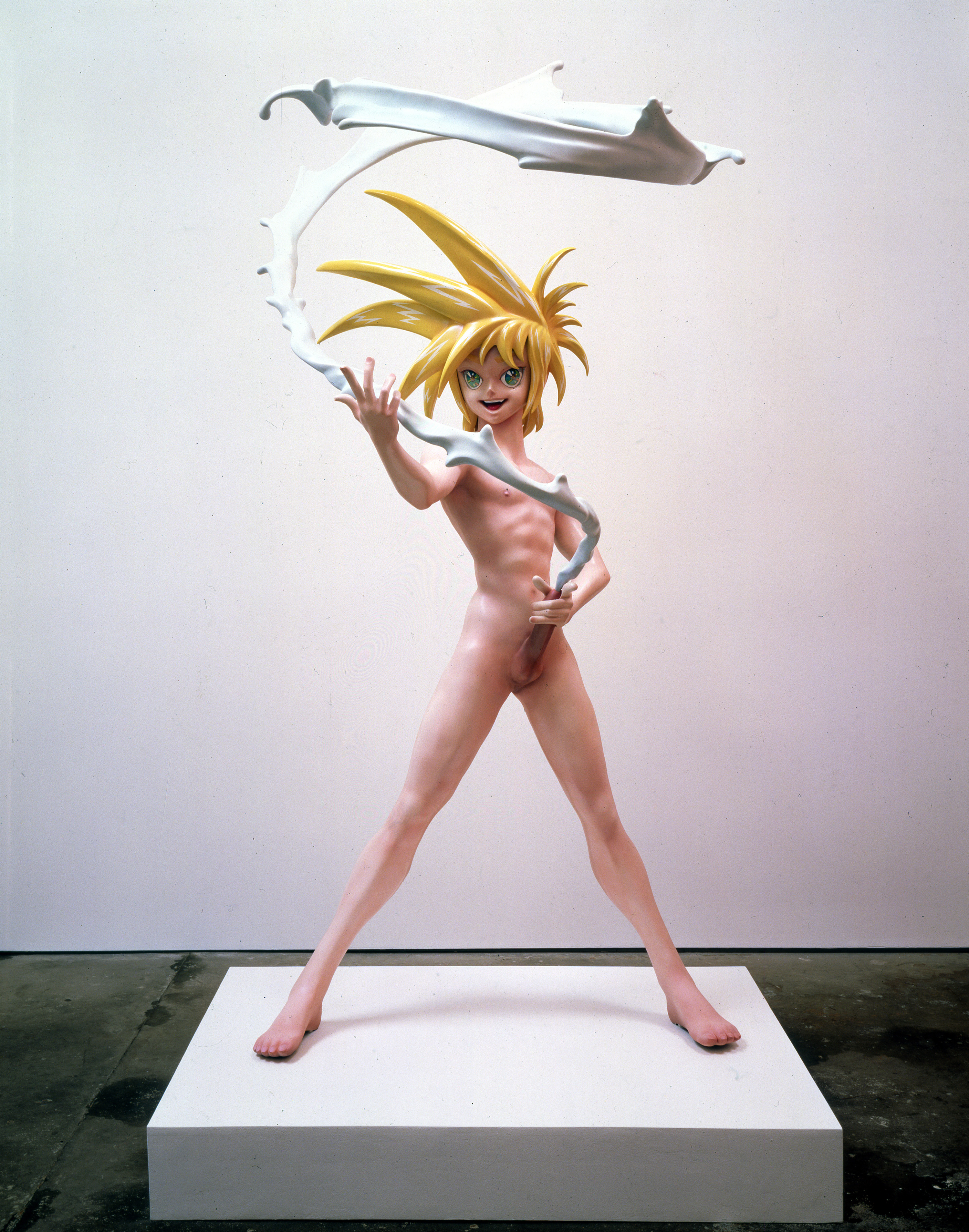
In May 2008, Murakami becomes one of the almost expensive living artist in the globe. His sculpture My Lonesome Cowboy (1998) is sold for more than than xv million dollars at Christie's auction.
Source: https://blog.artsper.com/en/a-closer-look/10-facts-know-takashi-murakami/

Post a Comment for "What Does Takashi Murakami Use to Make His Art"